Find the real cause, not the obvious one
In D4, Kanriq separates what produced the defect from what failed to stop it, and equips the team with the methods it already knows.
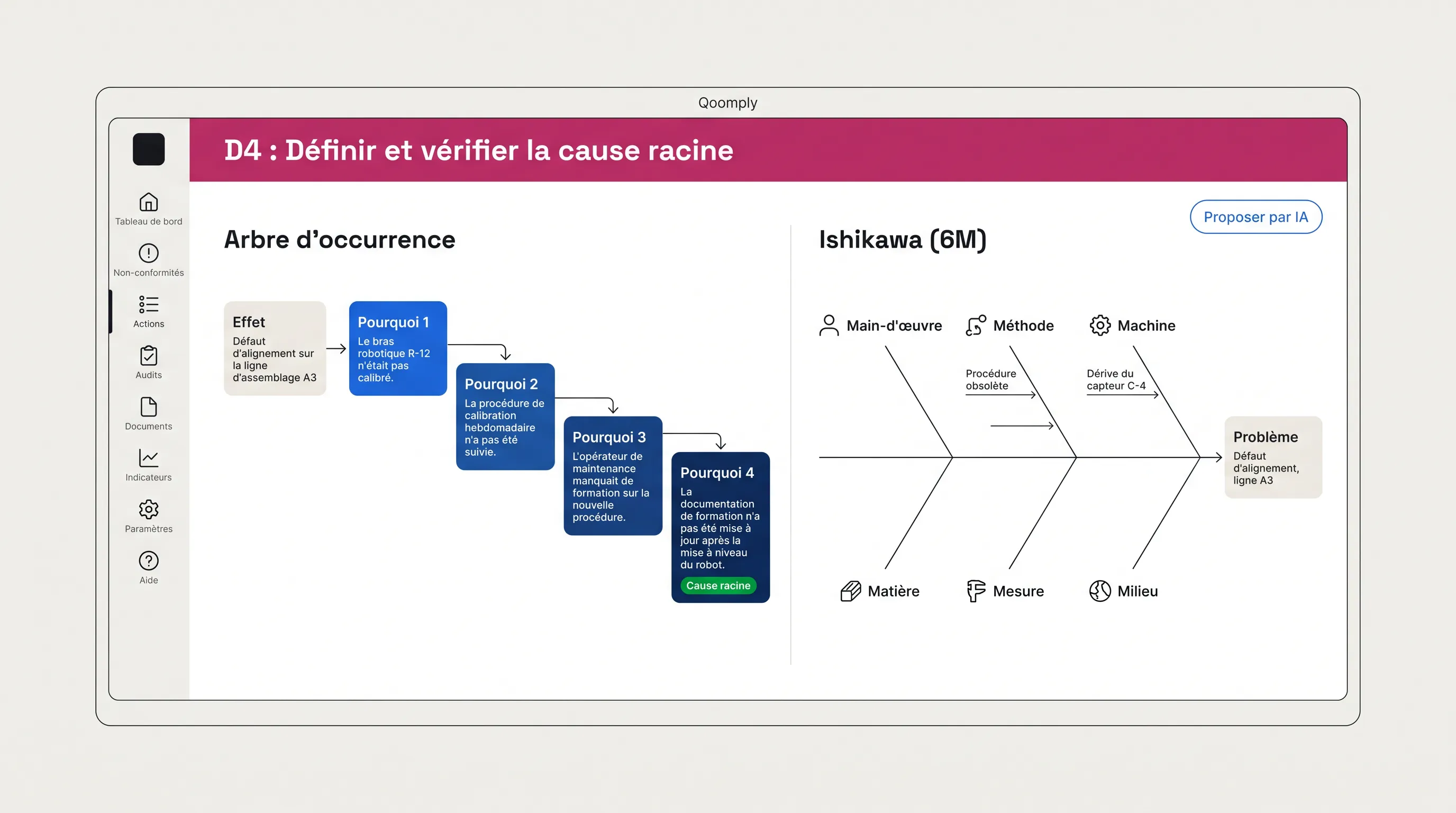
Two 5 Whys trees
One tree for occurrence (why the defect happened) and one for non-detection (why it reached the customer). Each level answers the previous one, down to a cause the team can act on; anything the file does not establish is marked as an interpretation.
Ishikawa, timeline and Is / Is Not
The Ishikawa sorts possible causes into the 6M, the timeline puts dated facts in order, and the Is / Is Not table narrows the problem down — with « To check » items when the file cannot conclude yet.
A validated cause, not a guess
Each root cause is confirmed by a validation action (ideally, reproducing the defect). The additional tools inform the analysis without blocking closure: only the 5 Whys gates it.
Frequently asked questions
- Why two 5 Whys trees?
- Because a defect that reaches the customer has two causes: what produced it and what failed to detect it. Treating them separately avoids fixing an inspection when the process is drifting, and the reverse.
- Does the AI make up causes?
- No. Each proposed card cites the passage of the file that supports it; a card that goes further is marked « interpretation » so the team checks it.
- Can we use only the Ishikawa?
- The additional tools are optional and validated separately. The 5 Whys remains the method that gates D4 closure.
Other features
- 8D claimsHandle every customer complaint as an 8D, from D1 to D8: AI drafts each step from the case file, every answer cites its source, your team validates.
- Meetings and actionsTurn meeting notes into structured minutes — findings, decisions, actions, open questions — and track actions with their owners and due dates.
- Documents, audits and KPIsVersioned procedures and records, AI search that cites its sources, prepared audits and process KPIs tracked in one place.
- Requirements, evidence and gapsLink every requirement to its evidence, see your quality system as a graph, detect gaps and get an alert when evidence is missing.