Every requirement linked to its evidence
Kanriq builds the graph of your quality system — requirements, processes, documents, records — and flags what is not covered.
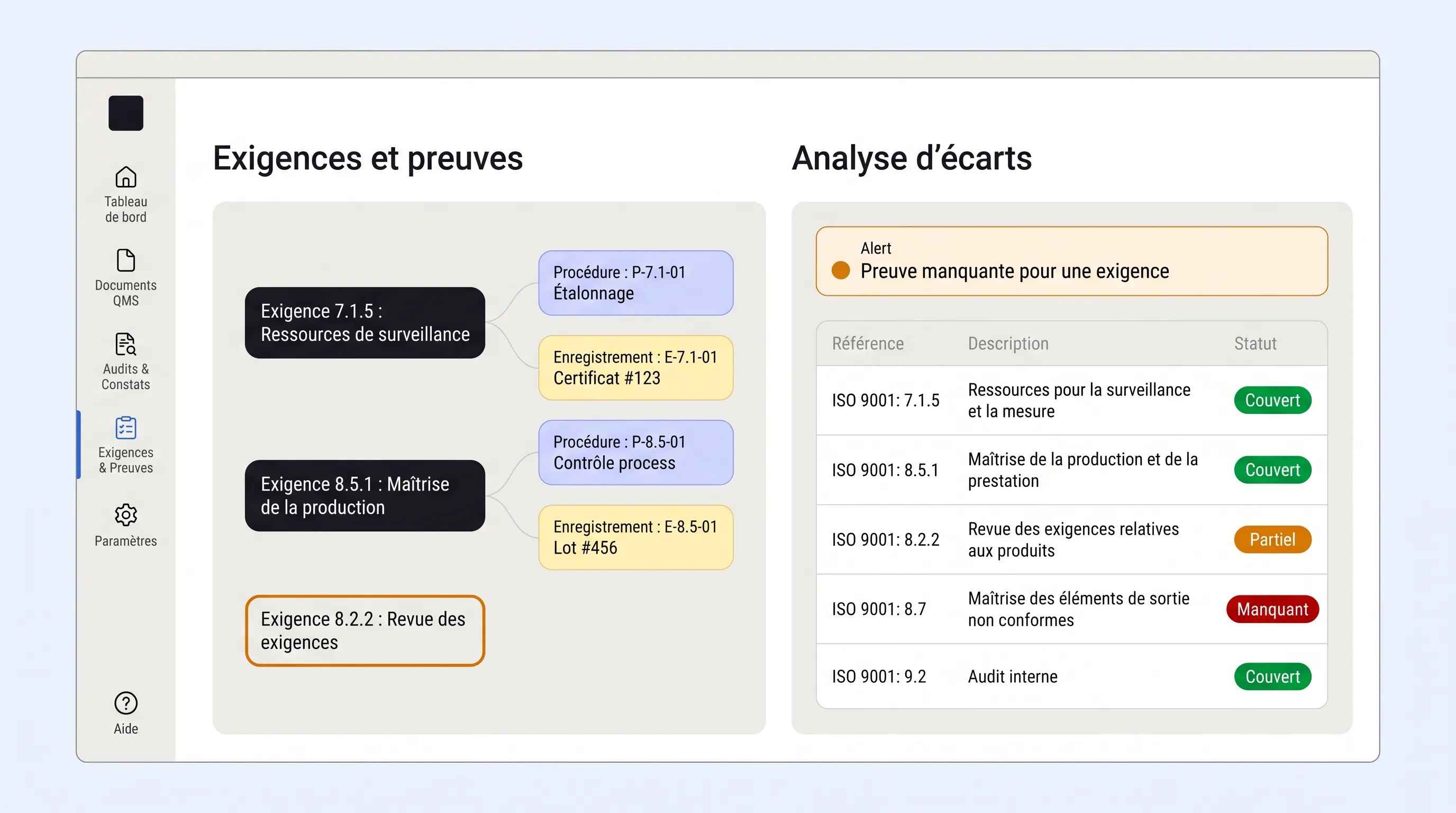
The quality system as a graph
Requirements, processes, procedures and records are linked. You see at a glance what covers a requirement, and what a document change affects.
Continuous gap analysis
Each requirement is marked covered, partial or missing depending on the evidence found. The analysis updates when a document changes, not only before the audit.
Alerts that arrive before the auditor
Missing evidence, an outdated document or a cited reference that no longer exists trigger an alert to the right owner, with the passage concerned.
Frequently asked questions
- What is a gap analysis?
- It compares what a standard requires with what the site's quality system demonstrates. It lists covered, partially covered and uncovered requirements.
- How does Kanriq decide that evidence covers a requirement?
- AI reads the documents in force against the requirement and cites the passage it relied on; the quality team confirms or corrects.
- Who receives the alerts?
- The owner of the document or process concerned, with a link to what needs fixing.
Other features
- 8D claimsHandle every customer complaint as an 8D, from D1 to D8: AI drafts each step from the case file, every answer cites its source, your team validates.
- Root cause analysisBuild the 5 Whys trees (occurrence and non-detection), the Ishikawa 6M and the Is / Is Not table, proposed by AI from the facts in the case file.
- Meetings and actionsTurn meeting notes into structured minutes — findings, decisions, actions, open questions — and track actions with their owners and due dates.
- Documents, audits and KPIsVersioned procedures and records, AI search that cites its sources, prepared audits and process KPIs tracked in one place.