
Customer complaints handled in 8D, without starting from scratch
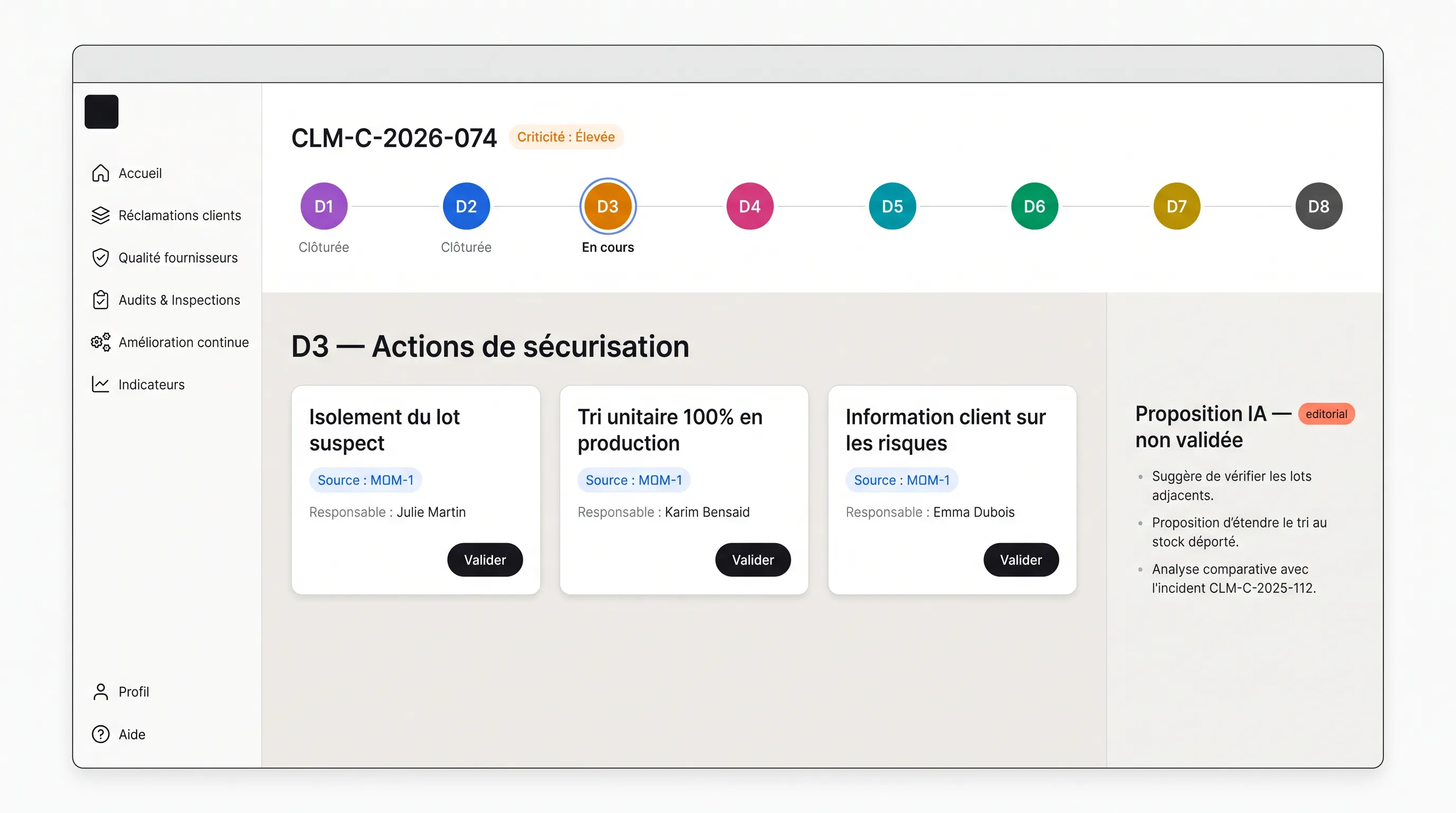
Kanriq guides the team from D1 to D8: a complaint register, structured steps, sourced AI proposals and a traced closure. The 8D leader approves every step.
One register for every complaint
Each customer or supplier complaint has its record: part, defect, criticality, detection point, leader. The register filters by step status, criticality or customer, and each site keeps its own lists of defect types and detection points.
AI proposes, your team validates
At each step, AI drafts a proposal from what the case file holds: the customer's description, attached documents, validated meeting minutes. Every answer names its source; what the file cannot establish stays empty and flagged instead of being made up.
From containment to closure
Containment (D3), root causes (D4), corrective actions (D5), effectiveness check (D6), standardisation and prevention (D7), summary (D8): steps follow each other, every closure is an explicit act of the leader, and reopening a step requires a justification.
Frequently asked questions
- What is the 8D method?
- 8D (eight disciplines) is a structured problem-solving approach: build the team, describe the problem, contain it, find the root causes, correct, verify, standardise and close. Many industrial customers require it.
- Does the AI fill in the 8D instead of the team?
- No. AI proposes sourced content from the case file; nothing enters the 8D until a team member validates it, and only the leader closes a step.
- Can actions from the 8D be tracked?
- Yes: an action proposed in a step is added to the site's action plan with its owner and due date, and its status flows back into the case file.
Other features
- Root cause analysisBuild the 5 Whys trees (occurrence and non-detection), the Ishikawa 6M and the Is / Is Not table, proposed by AI from the facts in the case file.
- Meetings and actionsTurn meeting notes into structured minutes — findings, decisions, actions, open questions — and track actions with their owners and due dates.
- Documents, audits and KPIsVersioned procedures and records, AI search that cites its sources, prepared audits and process KPIs tracked in one place.
- Requirements, evidence and gapsLink every requirement to its evidence, see your quality system as a graph, detect gaps and get an alert when evidence is missing.